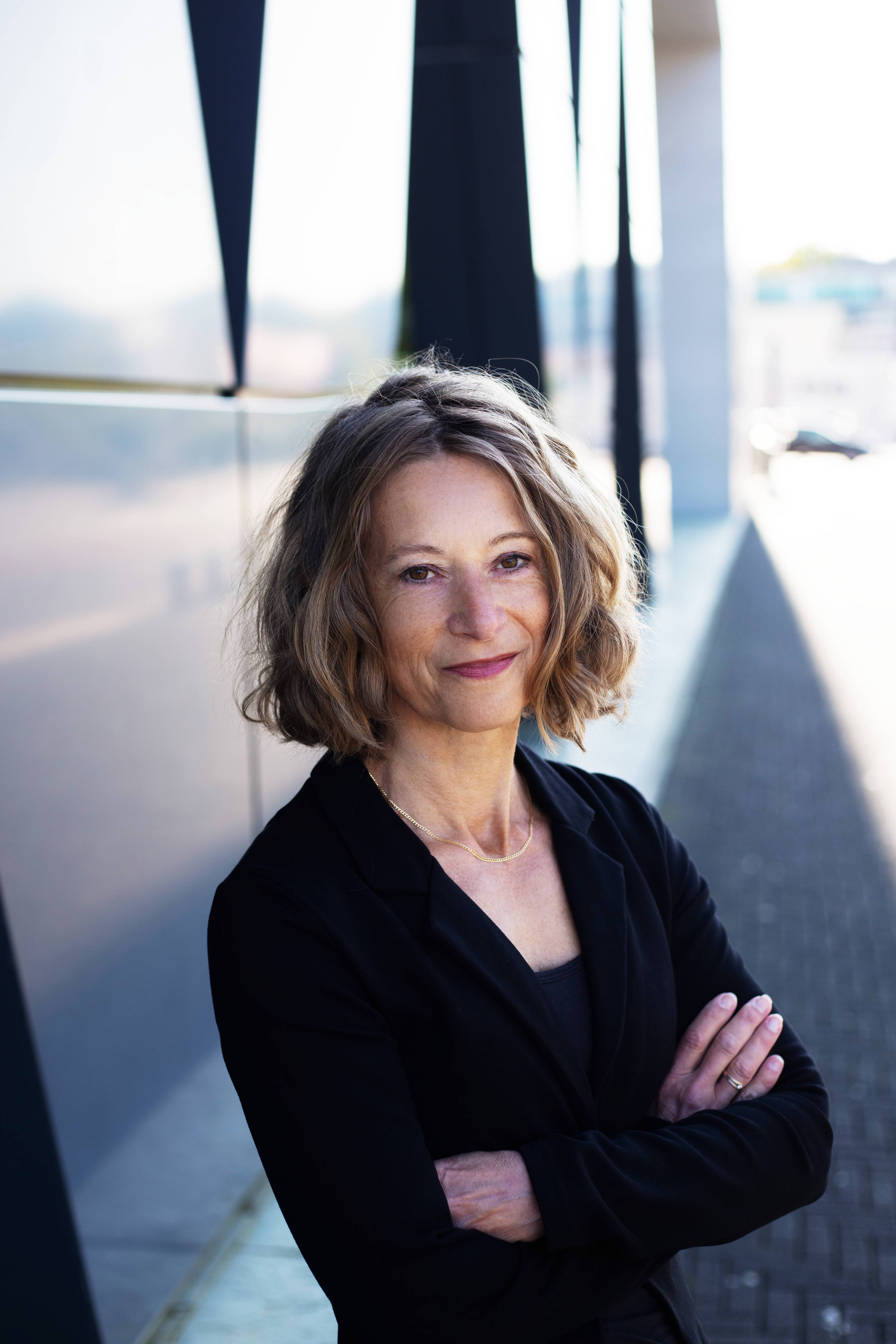
Anita, you speak about the future of work all over the world, yet you didn't come up through HR.
"I originally come from IT. I was approached by a company in HR that needed my expertise, and that's where I discovered I could translate complex IT into business terms, and act as the link between HR professionals and IT professionals. To do that, you have to tell a story: where does HR stand today, where do you want to go, and how do you use technology to get there? Because these days you can't do anything without IT. I started telling that story more and more often, and since 2020 I've been doing it as an independent keynote speaker at conferences all over the world."
You've said that looking ahead has limited value. So what do you base your story on?
"Looking three to five years ahead is difficult. Politics, the economy: you have no control over those. But some trends are based on data, and those you can actually work with. Demographic development in the Netherlands is fixed. We already know that large numbers of people will retire, and that too few young people are entering at the lower end of the labour market to replace them. We also know what people are studying, so you can make a reasonable estimate of which skills will become available on the labour market, and which won't. That data is freely available from Statistics Netherlands. It lets you help the business make decisions: you may want to open a site in Enschede, but with the qualifications we need, we won't find people there. Those are conversations you can then have with numbers on the table."
Organisations have been talking about skills-based working for years, but in practice it often stalls.
"The expectations were simply overblown at the start. We set out to map twenty or thirty skills per person, at different levels, with assessments. So complex that companies stopped seeing the benefit. And the task-oriented thinking that comes with it doesn't match how people actually work: nobody does task 1, task 2, task 3. But don't get me wrong: I am absolutely in favour of skills. You need to know which skills you have in house and what is available on the labour market. When leadership sets a strategy, it's HR's job to determine whether we can get the right people for it. And if not: do we upskill or reskill internally, or do we source people elsewhere? Look at ASML: they think continuously about which skills they need, where they'll get them, and for how long."
You also argue that we need to get more creative about what we call work. What do you mean by that?
"We retire at 67, but a great many people don't want to stop at all. That automatic cut-off in the law no longer fits the times. Say an experienced policy advisor is about to walk out the door. Could you tempt them to work for you from October to April, so they can spend the summer touring Europe in a camper van? We will have to be far more creative about work. Does work have to mean a permanent job of 36 to 40 hours a week, all year round? Or can you shape it differently, so you can draw on the people who are actually there? And don't think in terms of generations, because there is no scientific evidence for that. What people need is determined by events in their lives, such as having a child. Not by their age. So open your arrangements up to everyone, and you avoid age discrimination at the same time."
Almost every HR conference is now dominated by AI. Is that attention justified?
"You simply have to form a view on it, because it's unavoidable. I'd put it this way: with all the problems coming at us, AI may well be the right technology at the right moment to keep the Dutch economy on its feet. Technology can take over administrative work, which frees HR up for strategic and tactical work. And you don't necessarily have to buy something new to do it: I'd wager that many HR departments use less than 50 per cent of the functionality their current HR solutions already offer."
Finally: the room will be filled with HR directors and transformation leads from large organisations. Where will you take them on 6 October?
"I'll take the audience through four steps: demographic developments, the new employee in the broadest sense of the word, skills, and finally AI and technology. Not a theoretical story, but insights based on data that you can translate directly to your own department, your own company, your own organisation."
Register now
Would you like to hear Anita speak in person? You can, on the evening of Tuesday 6 October in Amsterdam, at The Future of Work: Navigating the Shift to a Skills-Based Organisation, which we are organising together with 365Talents. Speakers from both research and practice, including Booking.com, and a programme built around your own situation: you complete an organisational scan beforehand and leave with a one-pager tailored to your organisation. Places are limited.
View the programme and register