Column Trends in HR

Future-Proof Workforce Management in Healthcare

16-04-2026

As an HR professional in healthcare, no one needs to tell you the current state of the sector. The challenges are part of your daily bread: vacancies that remain unfilled for months, passionate employees leaving the industry exhausted, and weekly schedules that consistently prove to be an impossible puzzle. Amidst the heat of the moment, it is a challenge to even get around to the strategic questions: where will we be in three years, and how do we keep healthcare future-proof? 

1774953880085

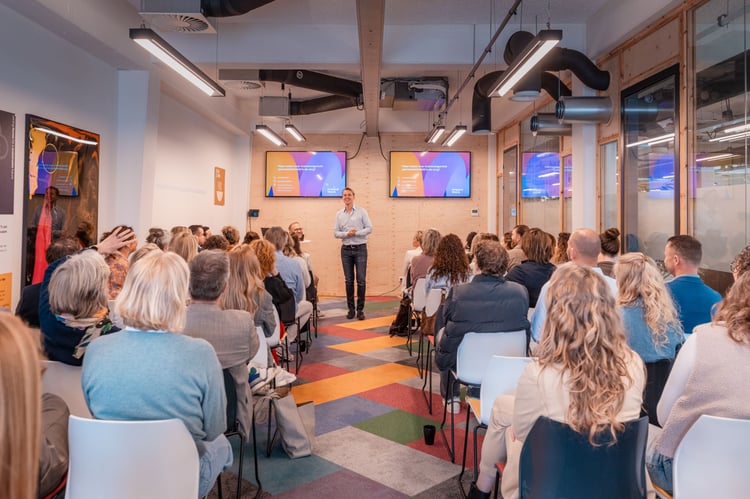
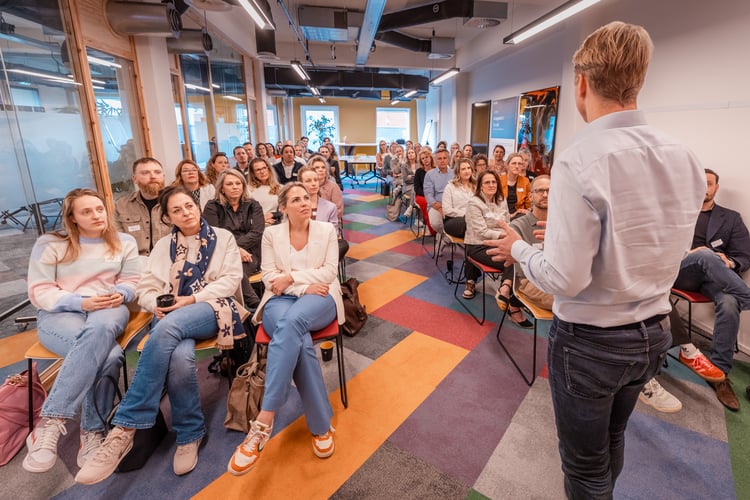
On March 26, we gathered with a large group of healthcare HR professionals to address exactly those questions. It was an inspiring afternoon where we shifted the focus from daily "firefighting" to the long term.

During the event, several leading healthcare organisations shared their honest stories. They provided a look behind the scenes at the challenges they faced, the sometimes difficult choices they had to make, and above all, the results they have since achieved.

Did you miss the event, or would you like to review the key insights? Below, we share the presentations and the common thread of an inspiring afternoon.

 👉 Link to the presentations 

The Harsh Reality: The Welfare Paradox in Healthcare

Rogier van Hamburg (ImpactWork) kicked off the afternoon with a compelling vision of the sector. We are currently in a so-called "welfare paradox": while the economy grows, in healthcare, this often comes at the expense of the well-being of those on the work floor. With an expected shortage of over 288,000 people by 2034, future-proof policy is no longer a "nice-to-have," but a bitter necessity.

According to Rogier, recovery starts at the foundation:

  • Increasing Inflow: Through recruitment excellence and a broader perspective on talent.
  • Strengthening Retention: Closing the "leak at the back door" by fully committing to employee happiness.
  • Transformation: Delivering care with fewer people, but with more impact.

The business case? For an average VVT (Nursing, Care, and Home Care) organisation, there is over €22.5 million to be optimized by bringing absence, turnover, and expensive external staffing (PNIL) back to healthy levels.
2026-03-27 ImpactWork-4667

Taking Control is Not a "Quick Fix" 

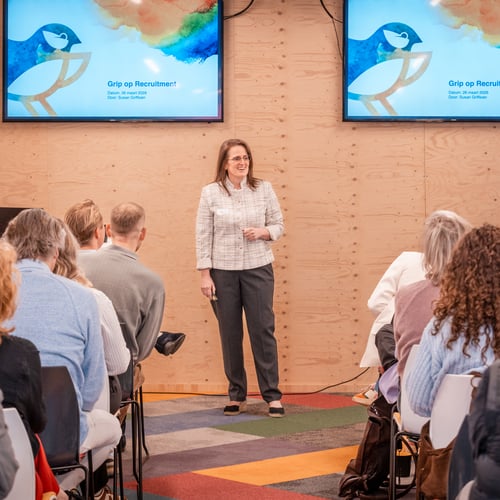
What does this transformation look like in practice? Susan Griffioen (Calidus) shared their honest story. After a period of "Code Red," Calidus radically changed course. They moved away from reactive recruitment and chose a data-driven strategy.

"We stopped hoping that people would find us; we started building a brand that people actually want to belong to."

By rewriting job descriptions for specific target groups and optimising the ATS (Applicant Tracking System), the threshold for new talent was lowered. The result? In early 2026, Calidus saw more inflow than outflow for the first time.

2026-03-27 ImpactWork-4753-2

Talent Over Systems: The Power of Skills

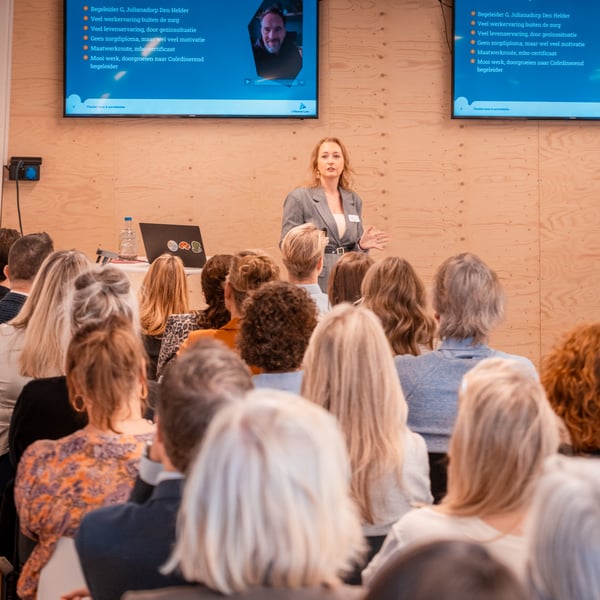
Ellen van Vliet ('s Heeren Loo) challenged us to look at diplomas differently. In a tight market, clinging to rigid job requirements is a dead end. At Heeren Loo, skills-based hiring is central.

By welcoming career-switchers based on life experience,  supported by vocational certificates and practical learning, a massive pool of untapped talent is accessed. The result: lower shortages, high engagement, and guaranteed quality of care.


2026-03-27 ImpactWork-4843

The Common Thread: Tech & Touch 

The common denominator of the afternoon was the combination of Tech & Touch. Technology and data are not there to replace humans, but rather to bring the human experience (the "touch") back into healthcare.

  • Smart Planning: Anouk Hazelager (Elanza) and Robert Platje demonstrated how technology ensures flexible staffing works without causing stress for the organisation.
  • AI as an Assistant: Jaap-Jan van Assen (ImpactWork) discussed how AI can handle time-consuming HR processes, giving the HR advisor time for strategic policy again.
  • Happiness as a Motor:  Maartje Burghoorn-Doets (Everybody Frank) provided evidence that investing in employee happiness has a direct effect on productivity, absence prevention, and innovation. Happy employees simply perform better.

Will You Help With Our Research?

At ImpactWork, we don't just want to discuss change; we want to support it with data. That is why we are currently conducting large-scale research into the status of sustainable HRM in the Netherlands.

Your practical experience as a healthcare or HR professional is essential. Completing the questionnaire takes about 7 minutes. The results (which we will share this summer) help us create sector-wide insights from which we can all learn.


👉 Participate in our Sustainable HRM Research here