The employment contract is often the last thing you arrange, yet it is the very first official document your new colleague reads from you. Unfortunately, this is precisely the stage where top talent sometimes decides to walk away. Not because of the salary, but because of the tone and substance of the document presented to them.
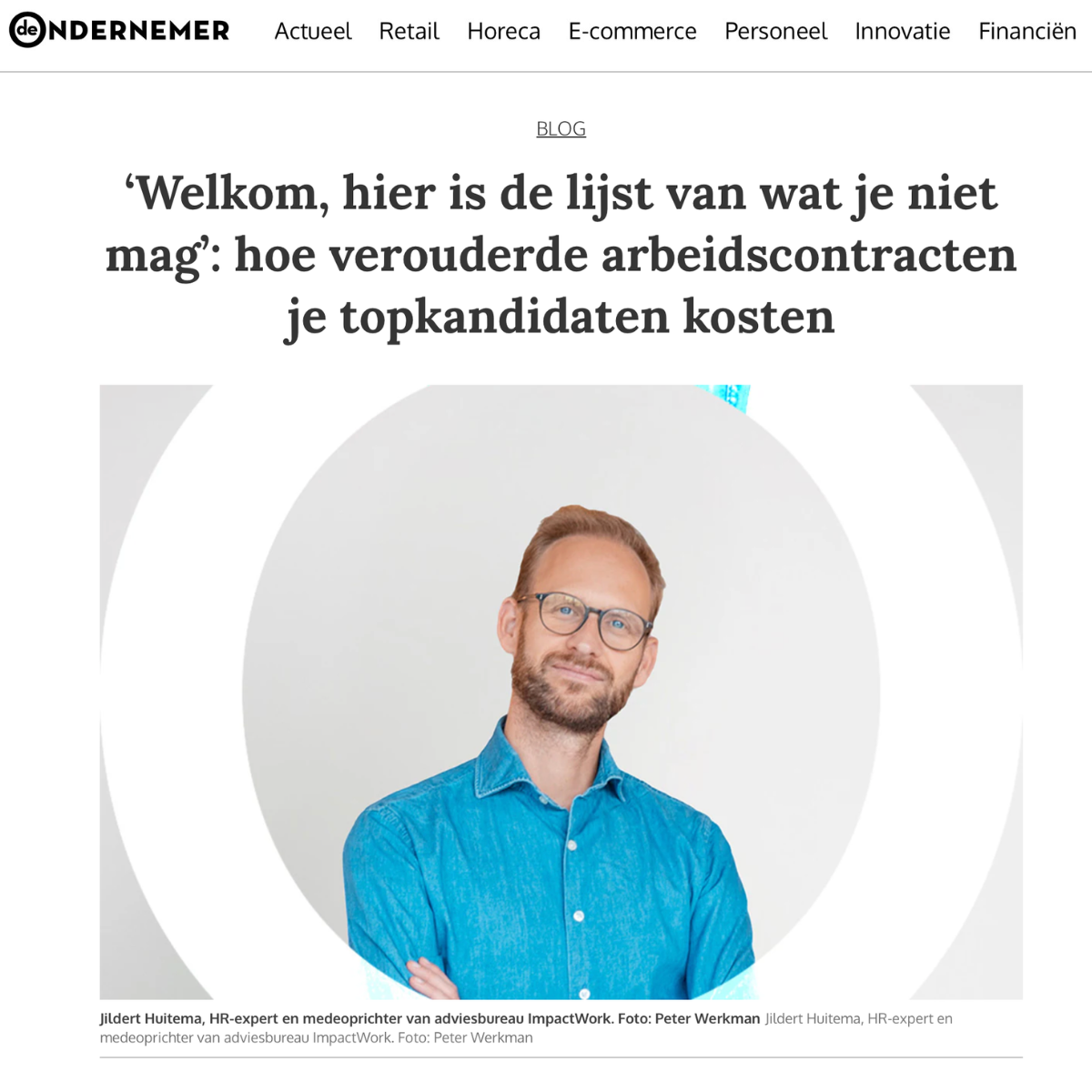
In his latest guest column for De Ondernemer, our co-founder Jildert Huitema shares his perspective on this. His core message? The best employment contract is usually not the longest one.
'Welcome, here is a list of everything you aren't allowed to do'
Many traditional employment contracts are packed so tightly with restrictive clauses, penalty provisions, and strict non-compete or non-solicitation agreements that it’s enough to discourage anyone. In essence, you are handing a new employee a document that outlines how they will be penalised before they have even worked a single day. This creates a harsh contrast with the warm, welcoming story you shared during the interview process.
A document full of defensive clauses can actually cost you great candidates. On the flip side, a clear and transparent contract offers a unique opportunity to show how you truly want to treat people: fairly, openly, and based on mutual trust. And that is exactly what the people you want to hire will notice.
Legally sound yet human
Does a shorter, clearer contract mean taking on legal risks? Absolutely not. A contract written in plain, understandable language that is rooted in trust can be just as legally secure. The key is ensuring the document reflects who you are as an employer. For example, take a critical look at your non-compete or non-solicitation clauses: is there a clear justification explaining why they are genuinely necessary? Is the duration and geographic scope reasonable for your industry?
Good vectors of employer branding and sustainable HRM don’t start on day one on the job. They start with the very document you ask someone to sign. Make sure it is a document you can be proud of.
Three questions for you as an employer
Take out your own standard employment contract and read it through the eyes of a new employee, not a lawyer. Then, ask yourself these three questions:
- Do you ever read your own contract through the eyes of a new employee?
- Does it align with the story you tell during the job interviews?
- Would you comfortably sign it yourself with peace of mind?
The last thing you arrange is the first thing they read. Make it count.
Curious to read Jildert Huitema's full column on De Ondernemer?
👉 Read the full column on De Ondernemer